

The Annapurna Circuit with Tilicho Lake Trek is a breathtaking Himalayan adventure that combines the classic Annapurna Circuit with an exciting side trip to the stunning Tilicho Lake, the highest lake in the world. This trek offers an enriching mix of natural beauty, cultural encounters, and challenging adventure. From lush valleys to rugged mountain terrain, the route includes crossing Thorong La Pass (5,416m) and visiting sacred sites like Muktinath Temple. Ideal for seasoned trekkers, it is one of the most rewarding trekking experiences in Nepal.
The Annapurna Circuit with Tilicho Lake Trek is a thrilling journey through Nepal’s most diverse and scenic trekking region, blending the classic Annapurna trail with an adventurous detour to Tilicho Lake—the world’s highest glacial lake at an altitude of 4,919 meters.
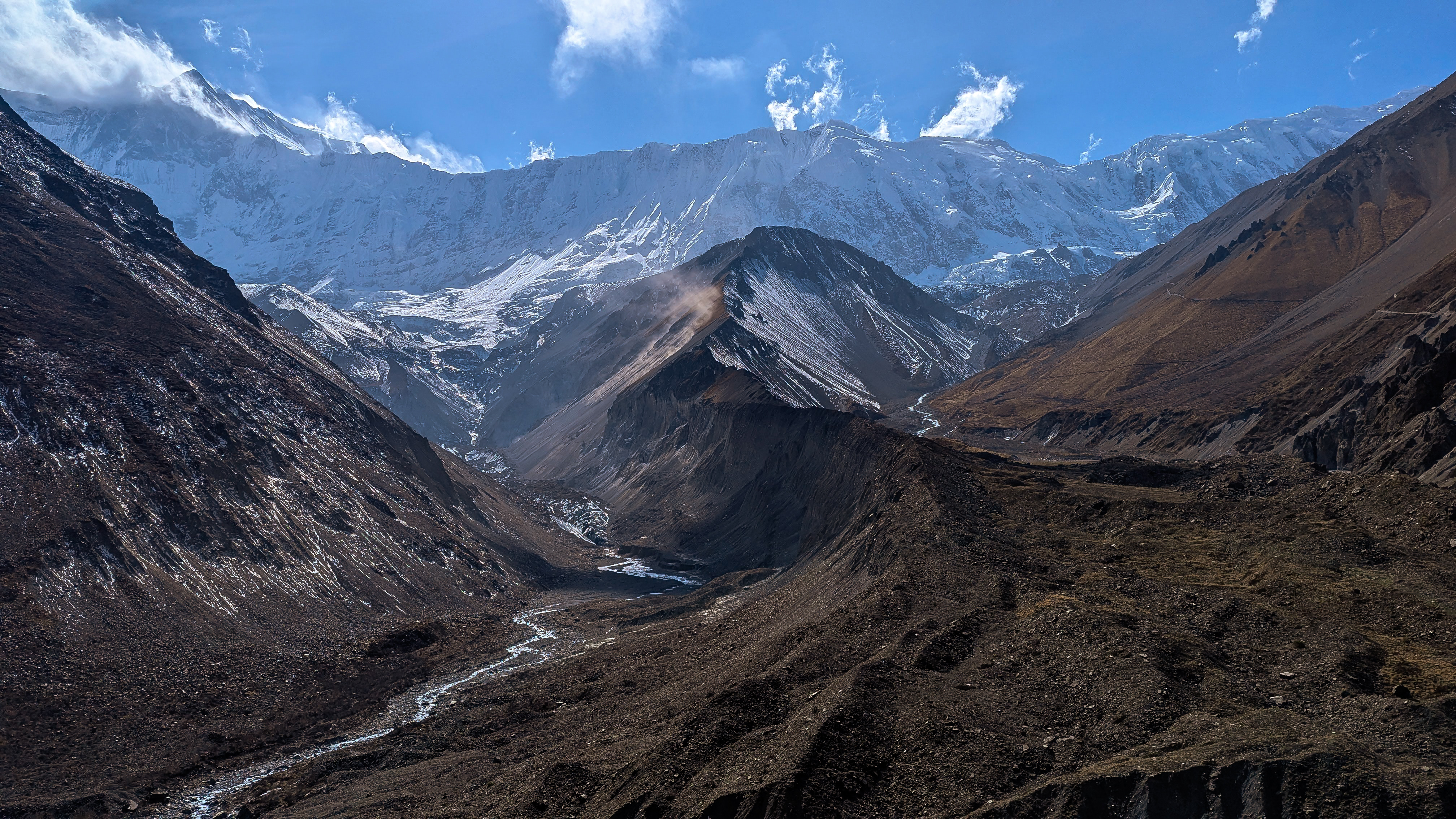
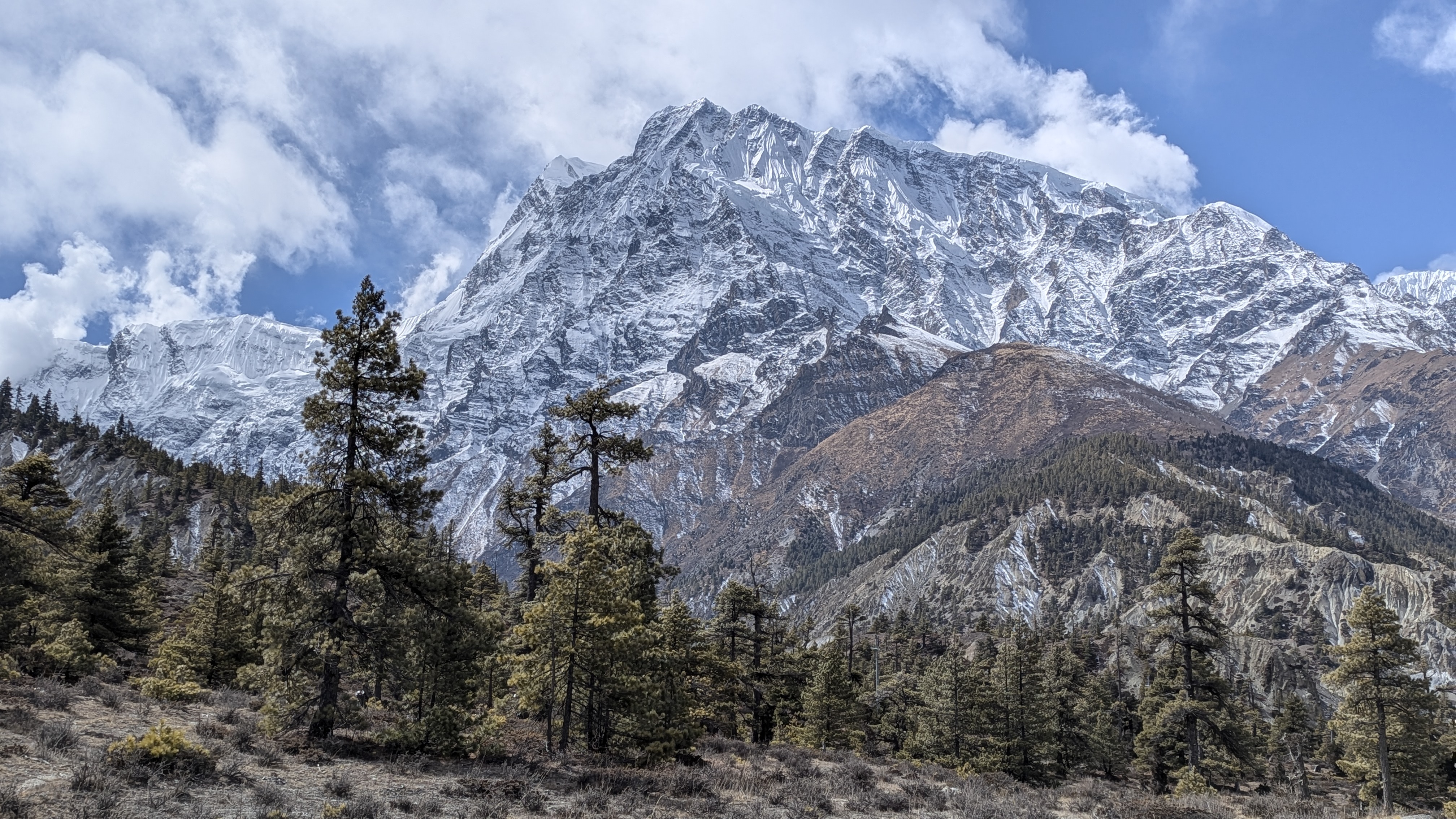
This epic trek begins in the lush lowlands of the Marshyangdi River Valley, winding through charming villages, terraced fields, and dense forests. As you ascend, the landscape transforms into arid highlands framed by towering snow-capped peaks, including Annapurna I, II, III, IV, Gangapurna, Dhaulagiri, and Tilicho Peak.
The highlight of the trek is the side trip to Tilicho Lake, a sacred and serene alpine lake nestled beneath the rugged cliffs of the Annapurna range. The trek then rejoins the main trail and leads to the challenging yet rewarding Thorong La Pass (5,416m)—the highest point of the trek, offering unmatched panoramic Himalayan views.
After crossing the pass, the trail descends into the spiritual and cultural hub of Muktinath, a revered pilgrimage site for both Hindus and Buddhists. The journey continues through the Kali Gandaki Gorge—the world’s deepest canyon—and picturesque villages like Marpha and Jomsom, known for their apple orchards and Tibetan influence.
Combining dramatic mountain scenery, rich cultural heritage, and high-altitude adventure, the Annapurna Circuit with Tilicho Lake Trek is perfect for trekkers seeking a more challenging and rewarding alternative to the classic route. It is a once-in-a-lifetime experience that immerses you in the heart of the Himalayas.
The traditional Nepali Dal Bhat comes with an unlimited refill option, making it one of the most popular dishes to consume on the trek..
Select a package to view what's included and excluded.
One of our officials will greet you at the Tribhuvan International Airport, Kathmandu, upon your arrival. We will take you to the hotel in our private tourist vehicle. Pre-trip meeting will be done and you will meet with your trip guide. Make sure to confirm your queries about trekking in the mountains and gear check up
We will start our trek by driving to Dharapani from Kathmandu via Besi sahar in a vehicle after having breakfast. We will drive on a concrete paved road from Kathmandu to besi sahar for 6 to 7 hours. After that, the road becomes bumpy and winding, and we will drive on a dirt road for approximately 4 to 5 hours to reach dharapani . The total drive for the day will be around 10 to 11hours
We leave Dharapani and follow the trails through the forests with pine, fir, oak, and maple trees along the Marsyangdi river to reach Chame - the district headquarters of Manang district. You will find yourself surrounded by the green forests around and over you, and as you look up, you will see remarkable views of Lamjung Himal, Annapurna II, and Annapurna IV (7,525m). We will also stop by a small hot spring for a short rest.
This day, after breakfast, we walk through a steep and narrow valley to have our first view of a massive rock wall - the Paungda Danda Rock, considered very sacred by the local people. The Paungda Danda Rock is a curved rock face rising 1500m from the Marshyandi river. From the trails, we also see clear views of Annapurna II in the south and Pisang Peak in the northeast. Then our path descends taking us to the Manang Valley floor into the Pisang village, where we will spend our night.
On our 5th day, we will be trekking on the upper trails through Upper Pisang via Geru, from where we can catch outstanding views of the north face of Annapurna II, III, IV, Gangapurna, Tilicho, and Pisang Peak. As the path ascends, you will feel the air turn cold, dry, and harsher. This trail goes through the Tibetan settlements, and we get a chance to explore Buddhist culture. We will not miss visiting Barge Monastery, the largest monastery in Manang. You will find that the path is dotted with Buddhist shrines as we pass more monasteries and finally reach Manang bazaar- an area that caters to tourists.
We will be acclimatizing on this day. However, we will remain busy throughout the day exploring Manang village. In the morning, we will visit Gangapurna & Ice Lakes, and spend the rest of the day soaking in the magnificent views of Annapurna III, Tilicho, Pisang, and Chulu Peaks. In the afternoon, we may visit the Himalayan Rescue Association in Vraja village, where we will be briefed about acute mountain sickness, its symptoms, and prevention methods.
The trek from Manang to Siri Kharka is an easier one. We take the upper route that leads down to a river, which we will cross, and then continue on a path that takes us through the coniferous forests. After walking for about three hours, we reach Tibetan settlement Khangsar, but we will continue our journey forward to reach Shiri Kharka. On the trails, we will get to see gorgeous views of Gungang Himal and Mt.Chulu. trek towards Tilicho Base Camp. The path should be easy, but it passes through landslide-prone areas. From the trails, we get to enjoy the impressive rock formations along with magnificent snow peaks - including Tilicho Peak.
This is one of the special days of the trek as we will be viewing Tilicho Lake itself. But we start our day early in the morning at Tilicho Base Camp to avoid afternoon wind. The path is quite steep, and after laboring for two to three hours, we will reach Tilicho Lake - one of the highest lakes in the world. A well-known French expedition team referred to Tilicho Lake as The Great Ice Lake. Tilicho lake sits surrounded by the majestic peaks - Tilicho Himal, Annapurna Range, and Nilgiri Himal. After enjoying the views of Tilicho Lake, we retrace our path back to Siri Kharka, where we will be spending our night.
From Siri Kharka, we descend to the uninhabited Khangsar Village. On the way, we pass Tare Gumba, a thousand-year-old monastery, but our journey continues following a rock wall that takes us out of Khangsar and leads us to Thorong Khola Valley and finally to Yak Kharka. From Yak Kharka, you can get glorious views of the Annapurna mountain ranges. If lucky, you may see blue sheep or even a snow leopard. Moving forward, you will cross a historic Mani wall just before arriving at Ledar.
You will walk uphill from Ledar to reach Thorong High Camp. Thorong High Camp is the last hamlet before the Thorong La Pass. While walking uphill, you will see mesmerizing views of several mountains - including Gudang, Syagang, Khatungkan, and Thorong Peak.
Today's trek will be the most challenging part of this trip, as we will be crossing Thorong La Pass – one of the highest passes in the world. It is also the highest point of the trek. To avoid the afternoon wind, we wake up at Thorong Phedi at 3 am and push ourselves against high altitude and icy air. When you reach the Thorong La Pass, just by seeing the incredible scenery, you will feel that nature has paid back your efforts handsomely. From here, you can see the Himalayan peaks extending to Tibet in the north, and if you look back, you will see Annapurna standing proud and tall. We descend from Thorong La Pass to reach Muktinath – a sacred site for Hindus and Buddhists. The Buddhist name for Muktinath is Chumig Ghasa, which means Hundred Waters in Tibetan. And, of course, Muktinath hosts 108 stone sprouts through which flows the icy cold water of Kali Gandaki. In addition to the water sprouts, you will also see the eternal flame at Muktinath, which has been burning there for more than 2000 years.
today is last day to get pokhara we start the day after break fast at hotel the road leads to pokhara via kangbeni,jomsom and beni tato pani (hotspring ) it will take 9 to 10 hours to get pokhara
the bus take around 8-9 hours to get ktm
company officials transfer to international airport for final departure
Our team guides, porters, and accompanying staff are locals with a broad knowledge about each and every location that we travel through.
Below is a recommended list of gear and equipment for Annapurna circuit with Tilicho lake-14days. Most items can be purchased or rented in Kathmandu.
It’s an extended version of the classic Annapurna Circuit Trek that includes a side trip to Tilicho Lake (4,919m)—the highest lake of its size in the world. The trek also crosses the Thorong La Pass (5,416m).
The trek typically takes 16 to 20 days, depending on your pace, side trips, and acclimatization needs.
Thorong La Pass – 5,416 meters Tilicho Lake – 4,919 meters
It is a challenging trek, with steep climbs, high-altitude conditions, and long walking days. Good physical fitness and some trekking experience are recommended.
The best seasons are: Spring (March to May) Autumn (September to November) Avoid the monsoon (June–August) and mid-winter (late December–February) due to landslides and snow.
While solo trekking is allowed, hiring a guide and/or porter is highly recommended, especially for the Tilicho section and Thorong La Pass.
Annapurna Conservation Area Permit (ACAP)
Yes. Both Tilicho Lake and Thorong La Pass are at high altitudes. Proper acclimatization and hydration are essential to prevent Acute Mountain Sickness (AMS).
The trek typically starts at Besisahar or Jagat and ends in Jomsom (or continues to Pokhara via flight/road).
It’s a side trip off the main Annapurna Circuit. The trail rejoins the circuit after crossing Tilicho Base Camp to Yak Kharka.
Teahouses and lodges are available along the route, including near Tilicho Base Camp. They offer basic rooms and meals.
Wi-Fi is available in larger villages (Manang, Chame), but limited elsewhere. Mobile networks are patchy beyond Manang.
Lodges offer a variety of meals such as Dal Bhat, noodles, pasta, pancakes, soups, eggs, and hot drinks.
No, unless you're trekking off-season or want to camp. The route has ample teahouse facilities with food and lodging.
Yes. You should have insurance that covers trekking up to 6,000m and emergency helicopter evacuation
To the start: Drive or take a bus from Kathmandu to Besisahar/Jagat. From the end: Fly from Jomsom to Pokhara, or take a jeep to Tatopani and continue by bus/jeep.
not really





These honest and detailed reviews come from travelers who have previously explored with Glacier Safari. The experiences and feedback shared here are sourced from trusted travel platforms, including TripAdvisor and Google.
