

Remote & Sacred: Nestled in Gorkha, northern Nepal within the Manaslu Conservation Area, Tsum Valley was only opened to trekkers in 2008. Locals, the Tsumbas, follow Tibetan-Bon and Buddhist traditions
The Tsum Valley Trek is a culturally immersive and spiritually enriching journey into one of Nepal’s most remote Himalayan regions. Nestled within the Manaslu Conservation Area, near the Tibetan border, Tsum Valley has remained relatively untouched by modern development, preserving its ancient Buddhist traditions and unique lifestyle.
This hidden valley, also known as the "Valley of Happiness" (Beyul Kyimolung), offers trekkers a chance to explore serene landscapes, dramatic mountain views, and sacred monasteries. The trail passes through dense forests, cascading rivers, and traditional villages like Chhokangparo, Nile, and Burgi, where you'll witness authentic Tibetan-influenced culture, art, and architecture.
Pilgrimage sites like Mu Gompa, Rachen Gompa, and Milarepa’s Cave (Piren Phu) highlight the spiritual depth of the region. Prayer flags fluttering in the wind, mani walls engraved with Buddhist scriptures, and the warm hospitality of the Tsumbas (local people) create a profound and unforgettable trekking experience.
Due to its restricted status, a special permit is required, and trekkers must be accompanied by a licensed guide. The Tsum Valley Trek is ideal for those seeking solitude, cultural richness, and an off-the-beaten-path adventure in the heart of the Himalayas.
The traditional Nepali Dal Bhat comes with an unlimited refill option, making it one of the most popular dishes to consume on the trek..
Select a package to view what's included and excluded.
One of our official will greet you at the Tribhuvan International Airport, Kathmandu, upon your arrival. We will take you to the hotel in our private tourist vehicle. Pre-trip meeting will be done and you will meet with your trip guide. Make sure to confirm your queries about trekking in the mountains and gear check up.
Kathmandu, the vibrant capital of Nepal, is a cultural and historical hub filled with ancient temples, bustling markets, and UNESCO World Heritage Sites. A typical sightseeing tour in Kathmandu includes iconic landmarks such as Swayambhunath (Monkey Temple), Pashupatinath Temple, Boudhanath Stupa, and Kathmandu Durbar Square. These sites showcase the city's rich blend of Hindu and Buddhist heritage, exquisite architecture, and traditional art. Exploring the narrow alleys of Thamel, visiting local markets, and witnessing daily rituals and festivals provide an immersive experience of Nepali culture. A Kathmandu sightseeing tour offers a deep insight into the spiritual, historical, and urban life of Nepal.
We will start our trek by driving to Machha Khola from Kathmandu via Soti Khola in a private tourist vehicle after having breakfast. We will drive on a concrete paved road from Kathmandu to Dhading Besi for 3 to 4 hours. After that, the road becomes bumpy and winding, and we will drive on a dirt road for approximately 5 to 7 hours to reach Machha Khola. The total drive for the day will be around 8 to 10 hours
After early morning breakfast, you will trek through a fertile landscape, across several ups and downs, and reach Tharo Khola, which you will cross to enter Khorlabesi. Then, you will leave Khorla Besi behind and reach Tatopani. Tatopani means hot water in Nepali, and, sure enough, there is a natural hot spring at Tatopani. The valley you will be trekking on now starts to get narrower and leads to Budhi Gandaki River, which you need to cross on a suspension bridge. Then comes a stone staircase adorned with prayer flags to reach Tharo Bharyang. You will continue along a path paved with stones to Jagat, a town that lies west of the Budhi Gandaki River.
Before heading to Lokpa, we register our permits for Manaslu and Tsum valley at the entry checkpoint in Jagat. Then we will climb over a rocky ridge to Salleri, where we stop for a while to enjoy the views of Mount Sringi and descend to Sirdibas. At Sirdibas, we cross the longest suspension bridge in Nepal to enter Philim and continue our trek forward, reaching Ekle Bhatti and then Lokpa, the entry point of Tsum Valley. This village is the first village in the Tsum valley that allows us to view the beautiful Manaslu range. This village is isolated and said to have been blessed by Padmashamva centuries ago.
The day starts with a trek from Lokpa village, the route to Tsum Valley, although the actual entrance to Tsum Valley begins from a deep slender, and narrow gorge leading to Lokpa. From the path, you will get amazing views of the Boudha Himal (6,672m) and Ganesh Himal. The route then descends to the Lungwa river valley and progresses through a dense forest full of rhododendron, juniper, and pine. Then you will reach Gumling, and shortly afterward, you will arrive at Syar Khola, which means you have reached the village of Chumling. The short trek will leave you enough time to visit the three main monasteries of Chumling - The Panago Gompa, Mani Dhungyur, and Gurwa Gompa.
The destination for this day is Chhokangparo, and we begin early in the morning. The upper Tsum valley opens from Chhokang Paro, situated on flat land. Actually, there are two settlements in Chhokangparo, one is Chhokang, and the other is Paro. You will follow Shair Khola and reach Domje - the largest town in Tsum Valley. From Domje, you will climb uphill to reach Chhokagnparo and get stunning views of Ganesh Himal and Himalchuli. We are sure you will enjoy the local hospitality and taste their unique Tibetan tea (butter tea).
The Nile village is on the western side and is the last village north of the upper Tsum Valley. It is on the sunny side of the Shiar Khola, and you have to walk for twenty minutes to reach the Nile from Chhule. Along the way, you will pass the sacred Phiren Phu Cave, also called Pigeon Cave. People believe the Tibetan Buddhist master Milarepa meditated in this cave, and his footprints are imprinted on this cave. As you proceed, you will walk past green meadows and fertile but narrow landscapes. There are two more gumbas in this region, abundantly painted with Buddhist murals. In these Gumbas, you will find artistic scripts carved on the stones. In addition, you will also find scripts written on papers, and prayer flags make these gompas a socio-cultural asset. You will cross a suspension bridge on the Shair Khola to arrive at the Nile village.
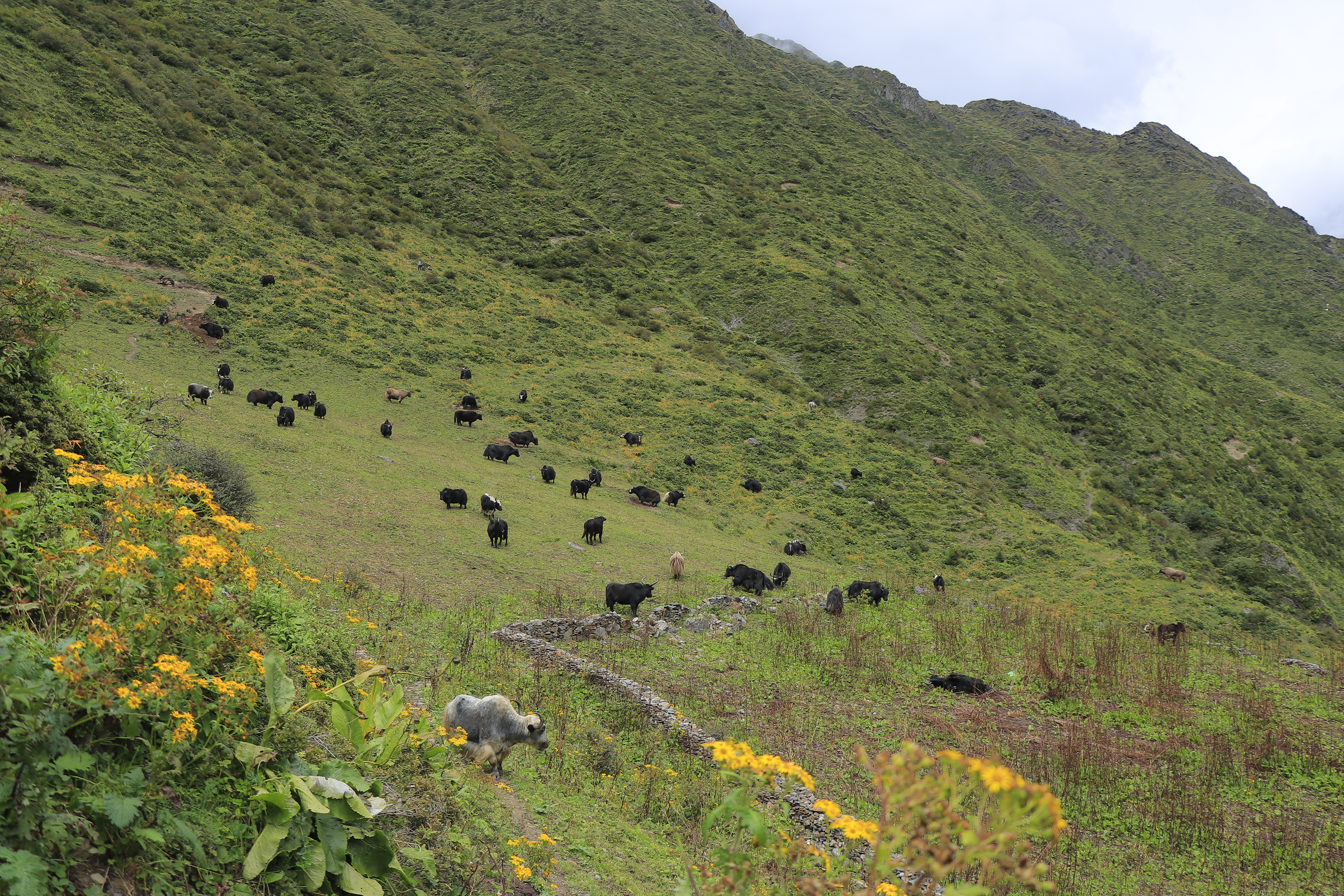
After early morning breakfast, you will head out of Nile Village on a trail that gradually ascends to Mu Gompa - the largest monastery in this region. However, after 2 hrs of a trek from Nile village, you will first reach Dephyudonma Gumba (monastery), one of the oldest monasteries in the region, signifying the dawn of the Buddist religion in this valley. Mu Gompa, established in 1895, lies at the highest and farthest point in the Tsum Valley and contains many religious books, including Kangyur, a life-size statue of Avalokiteshwara, and portraits of Buddhist masters Padmasambhava and Tara. To reach Mu Gompa, you will pass through several yak pastures and arid Trans Himalayan terrain.
Shortly after breakfast, we head to Rechen Gompa, a nunnery situated in the Shiar Khola Valley in the foothills of the mountains bordering Nepal and Tibet. You will return through Chhule and continue down as far as Phurba. Then onwards, you will take a route on the east banks of Siyar Khola through boulder-covered plains to reach Rachen Gompa. This Gompa, built in 1905, houses Ngak-pa sect nuns. The Gompa’s interior contains several murals relating to Buddhism and its history.
The trek heads south, leading to Chhokangparo, on a route towards Chumling. Within two hours of the trek, you will see a small white Gompa at Gho (2,485m). From this monastery, you will descend on a path that eventually leads to a wooden bridge over Siyar Khola. After crossing this bridge, you will reach Domje, home to a Tibetan herbal medicine clinic and a school. From Domje, we head east, climbing through pine, juniper, and rhododendron forest, and from the path, you will see several mani walls and prayer flags. You will ascend one more time through the silver pine forest and reach Lungdang Gompa.Especially in spring, you will get breathtaking views, complete with blooming rhododendrons from the trails. Gumba Lungdang is home to about forty nuns and is known for its intense puja, which takes place from 6:00 to 7:30 pm. From the gompa, you can enjoy beautiful and astonishing views of the mountains all around.
Today will be an exciting day as you will trek to the Ganesh Himal Base Camp. You will start the trek by ascending, but the views will reward you amply. The path takes you through smaller valleys. Few people head towards Ganesh Himal Base Camp, so the trails might not be obvious, but you should not worry, as our guides will show you the path. You will reach Ganesh Himal Base Camp in about four hours. After appreciating the views from Ganesh Himal Base Camp, you will return back to Gumba Lungdang for the night.
We head back to Lokpa. At first, you will descend to Domje, taking the upper track, crossing the Laudang Khola. From Domje, you will head south, passing beautiful dense forests and crossing suspension bridges to Ripche (2,470m). Then you will descend to Batti Ghumlong and, from there, ascend a bit to reach Lokpa.
It is time to descend to Jagat, where you will rejoin the Budhi Gandaki river. From the trails, you will get a few glimpses of the mountains. Today’s hike through forests and terrain downhill should be pleasant and easy for your legs. You will cross several suspension bridges to reach Sirdibas village before arriving at Jagat.
last day of the trek we walk all the way down to machha khola
10-12 hours of drive back to ktm
The trip concludes – our airport representative will drop you at the Kathmandu international airport for your final flight departure from Nepal.
Our team guides, porters, and accompanying staff are locals with a broad knowledge about each and every location that we travel through.
Below is a recommended list of gear and equipment for Tsum valley trek-17days. Most items can be purchased or rented in Kathmandu.
Tsum Valley lies in the northern part of the Gorkha District, Nepal, near the Tibetan border. It is a secluded Himalayan valley known for its Tibetan Buddhist culture, ancient monasteries, and stunning landscapes.
The standard trek takes around 14 to 18 days, depending on the starting point and whether it’s combined with the Manaslu Circuit Trek.
Tsum Valley is a moderate to challenging trek due to its remote setting, long walking days, and basic infrastructure. Prior trekking experience and good physical fitness are beneficial.
Yes. You need the following: Tsum Valley Restricted Area Permit Manaslu Conservation Area Permit (MCAP) You must trek with a licensed guide and be in a group of at least two trekkers (excluding the guide).
The best seasons are: Spring (March to May) Autumn (September to November) These offer clear skies, dry trails, and great mountain views.
Yes. Many trekkers combine Tsum Valley with the Manaslu Circuit Trek, making a longer and more varied Himalayan adventure.
Basic teahouses and home-stays are available, though more rustic and limited compared to other regions like Everest or Annapurna.
While the elevation in Tsum Valley is not as high as Larke Pass, it can reach over 3,700 meters, so gradual ascent and acclimatization are still important.
You’ll explore ancient monasteries, Tibetan-influenced villages, and interact with locals practicing Tibetan Buddhism. Key sites include Mu Gompa, Rachen Gompa, and Milarepa's Cave.
Mobile connectivity is unreliable or unavailable in many parts of the valley. Some villages may offer limited solar power and charging, but Wi-Fi is rare.
Meals are basic and locally prepared. Expect dal bhat, Tibetan bread, noodles, potatoes, and some Tibetan dishes. Options are more limited than on commercial trekking routes.
Yes. Ensure your travel insurance covers trekking in remote areas, altitudes over 3,500m, and emergency evacuation by helicopter if needed.



These honest and detailed reviews come from travelers who have previously explored with Glacier Safari. The experiences and feedback shared here are sourced from trusted travel platforms, including TripAdvisor and Google.
