

The Everest Base Camp Trek is one of the most iconic and adventurous trekking journeys in the world. This classic trek takes you through the heart of the Khumbu region, offering breathtaking views of Mount Everest and surrounding Himalayan giants. Along the way, trekkers experience rich Sherpa culture, ancient monasteries, and dramatic landscapes, culminating at the base camp of the world’s highest mountain at 5,364 meters.
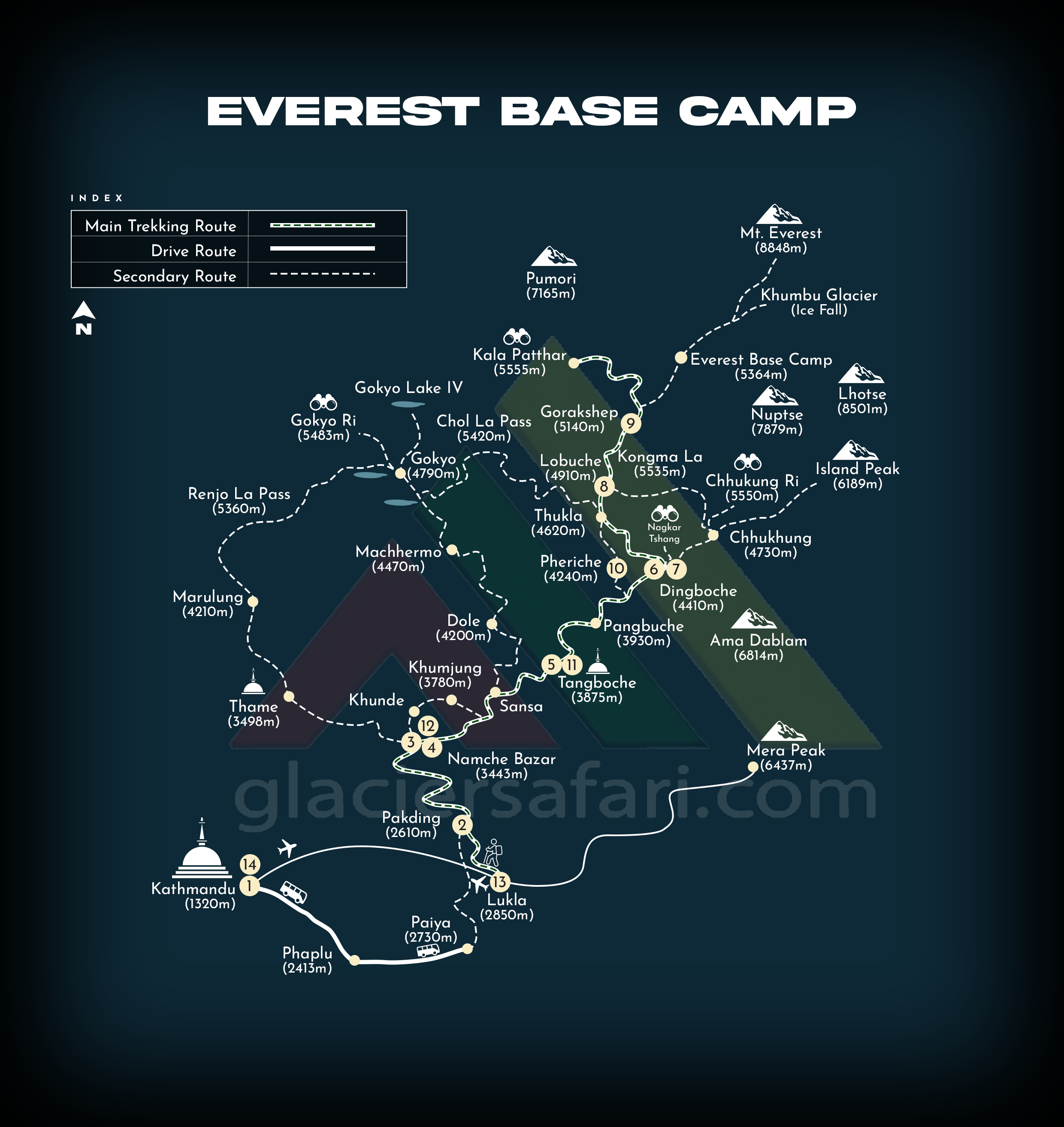
The Everest Base Camp Trek is Nepal’s most famous trekking adventure, leading you to the base of the world’s tallest mountain, Mt. Everest. Starting with an exhilarating flight to Lukla, the trail winds through the vibrant Sherpa settlements of Phakding, Namche Bazaar, and Dingboche before reaching Everest Base Camp at 5,364 meters. Along the way, trekkers encounter stunning Himalayan panoramas, ancient monasteries, glacial rivers, and rhododendron forests.
The trek is a unique blend of natural beauty and cultural richness, offering insights into the lifestyle of the Sherpa people, their Buddhist traditions, and the spiritual significance of the region. The hike to Kala Patthar provides the best close-up view of Mt. Everest, making the journey even more rewarding. Ideal for trekkers with good physical fitness, this 12–14 day adventure is a life-changing experience for nature lovers and adventure seekers alike.
The traditional Nepali Dal Bhat comes with an unlimited refill option, making it one of the most popular dishes to consume on the trek..
Select a package to view what's included and excluded.
One of our officials will greet you at the Tribhuvan International Airport, Kathmandu, upon your arrival. We will take you to the hotel in our private tourist vehicle. Pre-trip meeting will be done and you will meet with your trip guide. Make sure to confirm your queries about trekking in the mountains and gear check up
In peak trek seasons (March, April, May, September, October, and November), Lukla flights from Tribhuvan International Airport (TIA) may be rerouted to Manthali Airport due to traffic congestion. So, during these months, our guide will pick you up from your hotel at around 12:30 AM for a five-hour drive to Manthali. From Manthali, you will take a 20-minute flight to Lukla. In other months (December, January, February, June, July, and August), you will take a 40-minute flight to Lukla from Kathmandu. If you want to avoid the drive to Manthali from Kathmandu, you can book a helicopter to Lukla. However, it will cost you around USD 550 extra, provided five persons share the cost. Our journey to EBC, which begins from Lukla, will be very exciting, as it will be our first day of the trek. We will leave Lukla and trek through Chaurikharka village and descend to Dudhkoshi Ghat (2,530m / 8,300ft) until we reach Phakding. Today's trek will be short and enjoyable as we will also be acclimatizing. We can spend our spare time visiting local monasteries (like Rimishung Monastery) and preparing ourselves for a long trek the next day.
We will wake up in the morning and continue trekking along the northern bank of the Dudh Koshi River, while enjoying the majestic views and crossing many suspension bridges over the Dudh Koshi River, including the Hillary Suspension Bridge. As we move forward, we arrive at the Sagarmatha National Park check post, where we will have our permits registered and then climb up through the dense forests. From this forest, we will catch the first sight of Mt. Everest. Trekking further, we will arrive at Namche Bazaar — the gateway to Everest.
It is time to acclimatize at Namche Bazaar itself. We recommend you explore Namche Bazaar, as this town hosts numerous WiFi-linked cafes and restaurants, souvenir and gear shops. We have several hiking options — such as visiting Hillary School, Sherpa settlements, Syangboche Airport, and yak farms. If you are passionate about Everest, you should not miss hiking up to the Everest View Hotel, from where you can catch breathtaking views of Mt. Everest.
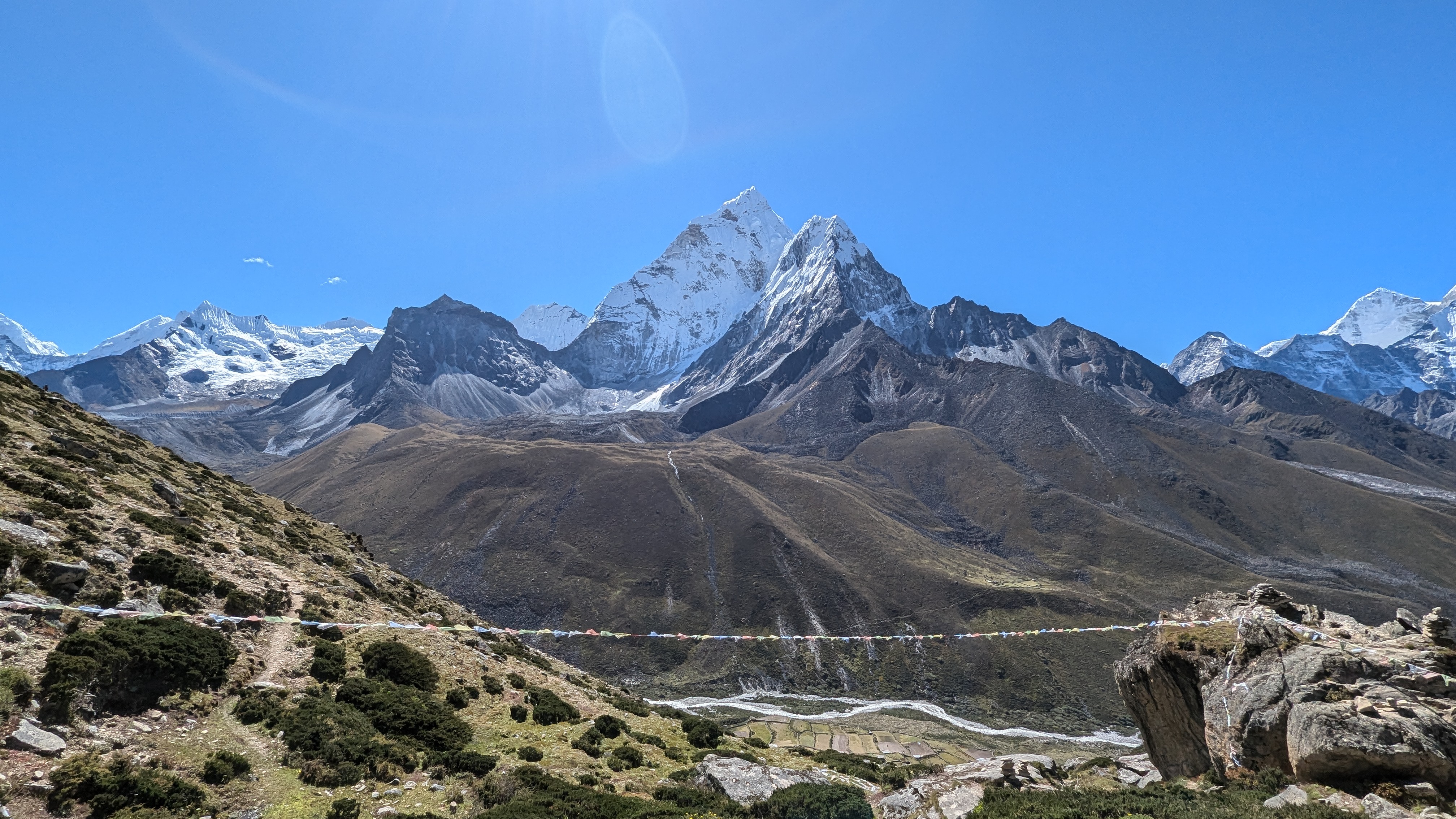
This day we will leave Namche and head to Tengboche. The trail is full of ups and downs and passes through forests, making the trek challenging, but the views you get to enjoy are truly rewarding. If you are lucky, you might also spot musk deer, pheasants, and Himalayan Thars. Near the end of the trek, you will find yourself descending to Phunki Thenga Village, but after leaving Phunki Thenga, you will be ascending continuously until you reach Tengboche. Tengboche looks like handcrafted natural beauty, opening up stunning views of Everest, Nuptse, Lhotse, and Ama Dablam. This day also provides you the chance to see the biggest Buddhist monastery in the Khumbu Region — the Tengboche Monastery. We will be spending the night at Deboche.
After breakfast, we will be heading to Dingboche. On the way, we will pass many chortens, mani walls, and several small villages — including Pangboche, from where you can enjoy the stunning views of Mt. Ama Dablam. Throughout the trek, you will be gaining altitude, and as you move nearer to Dingboche, you can see fields surrounded by stone walls built to protect crops. In this harsh high-altitude environment, the locals manage to grow barley, buckwheat, and potatoes this way. As night falls, you will stay at Hotel Good Luck in Dingboche.
It is time for acclimatization, once more. By reaching Dingboche, we will have gained considerable altitude, and our body needs time to adjust to the thin air and high altitude. However, to remain busy, we will be walking up the ridge above Dingboche to get spectacular views of mountains - Ama Dablam, Island Peak, Cho Oyu, & Makalu.
The trek to Lobuche will start on the trail that leads to a short uphill near the ridge above Pheriche Village. You will soon find yourself moving alongside the Khumbu Glacier as the hike takes you higher to the Thukla Hills. At the Thukla Hills, you will see the memorial statues of climbers who passed away in this region. Continuing our trek forward, we reach Lobuche, our destination for that day.
This is an extraordinary day, as we will be summiting Everest Base Camp. We begin by trekking along the lateral moraine of the Khumbu Glacier until we reach the breathtaking Gorak Shep Village, surrounded by snow-capped peaks. After a short rest and leaving our belongings behind, we hike up to the legendary Everest Base Camp — the closest you can get to the world’s highest mountain without mountaineering gear. Here, you'll soak in the surreal atmosphere, capture incredible photos, and reflect on your journey and achievements. After spending some memorable time at EBC, we trek back to Gorak Shep for the night. Along the way, you’ll also witness the mighty Khumbu Glacier, the highest glacier in the world.
We will be waking early in the morning at Gorak Shep and hiking to Kala Patthar to view the sunrise at Mt. Everest and other peaks. Believe us - you have never seen anything as awe-inspiring as the early sunshine covering Mt. Everest anywhere else. After spending some time at the viewpoint, we will trek back to Gorak Shep for breakfast. We will rest for a bit and start our trek to Pheriche, our destination for the day.
After a good night's sleep at Pheriche, we wake up early in the morning, have breakfast, and then trek down towards Tengboche. Our way passes through the rhododendron forests across the Imja Khola bridge, through the juniper forest, and finally to Tengboche, where we will be spending our night.
After finishing breakfast at Tengboche early in the morning, we head back to Namche Bazaar. The trail takes us through forests full of high-altitude wildlife like pheasants, musk deer, mountain goats, and even snow leopards. Along your path, you will also see numerous prayer flags, chortens, the backside of Lhotse, and Mt. Everest. After arriving at Namche Bazaar, we will head to our lodges and rest as the trek for this day is over.
Today's trek will be a short one as we head to Phakding, following the banks of the Dudh Koshi River and crossing many suspension bridges that lie on the way. After passing through several forests and small villages, we will finally reach Phakding. We will stay at Lukla
we take flight to kathamandu or manthali depends on how busy airport is and the weather
last day of your trip so you well be transfer to airport on your flight schedule by tourist vehicle.
Our team guides, porters, and accompanying staff are locals with a broad knowledge about each and every location that we travel through.
Below is a recommended list of gear and equipment for Everest base camp trek -15 days. Most items can be purchased or rented in Kathmandu.
The standard Everest Base Camp trek takes about 12 to 14 days, including arrival in Lukla, acclimatization, and return.
The best seasons are: Spring (March to May) – Stable weather, clear skies, and blooming rhododendrons. Autumn (September to November) – Excellent mountain views and mild temperatures.
The highest point is Kala Patthar at 5,545 meters (18,192 feet), a famous viewpoint above Everest Base Camp (5,364 meters).
The trek is moderate to challenging, involving high altitudes and daily hikes of 5–7 hours. Good physical fitness and mental preparation are important.
Not mandatory, but prior hiking or trekking experience helps. Beginners with decent fitness can complete the trek successfully.
Yes. Acute Mountain Sickness (AMS) is a real risk due to the high altitude. Proper acclimatization and hydration are key to prevention.
Hiring a guide is recommended for safety and navigation. A porter helps carry your load, making the trek more enjoyable.
The trek begins with a flight from Kathmandu (or Ramechhap) to Lukla and follows the trail through Namche, Tengboche, Dingboche, and Gorak Shep to reach EBC.
Teahouses or mountain lodges are available throughout the trek. They offer basic rooms with shared toilets and simple meals.
Yes, but connectivity is limited. Wi-Fi is available at many teahouses (for a fee). Mobile coverage (NTC/Ncell) is inconsistent.
Teahouses offer Dal Bhat (Nepali meal), noodles, soups, pasta, rice, eggs, and basic Western food. Vegetarian options are easy to find.
Warm layers and down jacket Waterproof gear Trekking boots Gloves, sunglasses, sunscreen Water purification tablets Sleeping bag (rated -10°C or lower) Personal medicines
Yes, you must have insurance covering high-altitude trekking (up to 6,000m) and emergency evacuation by helicopter.
Yes, but power is limited. Most lodges offer charging for a small fee. Bring a power bank for backup.
Yes, solo trekking is allowed and common. However, for safety and local support, many prefer hiring a guide or joining a group.
Begin training 2–3 months in advance, focusing on: Cardiovascular workouts (hiking, running) Leg strength exercises Endurance and stamina building
ATMs are available in Lukla and Namche Bazaar only. Carry sufficient cash (Nepali rupees) for the trek as most places don’t accept cards.



These honest and detailed reviews come from travelers who have previously explored with Glacier Safari. The experiences and feedback shared here are sourced from trusted travel platforms, including TripAdvisor and Google.
