

The Manaslu Circuit Trek is a remote and adventurous Himalayan journey that circles Mount Manaslu (8,163m), the 8th highest mountain in the world. This off-the-beaten-path trek offers stunning mountain scenery, diverse landscapes, and rich Tibetan-influenced culture. Starting from the lush lowlands of Arughat or Soti Khola, the trail ascends through deep gorges, forests, and traditional villages before reaching the dramatic high-altitude pass Larkya La (5,160m). Unlike more commercial routes, the Manaslu Circuit remains less crowded and offers a more authentic trekking experience. It lies within the Manaslu Conservation Area, home to endangered wildlife and ancient monasteries. The trek requires a special restricted area permit and must be done with a registered guide. Ideal for experienced trekkers seeking a quieter alternative to Annapurna or Everest regions, the Manaslu Circuit Trek is both culturally rich and scenically spectacular
Exploring the untouched region of Nepal, the Manaslu Circuit trek is emerging to be one of the most extraordinary trekking experiences in the country. Nestled in the heart of Gorkha, the trek to Manaslu Circuit provides you with breathtaking panoramic Himalayan vistas of Mount Manaslu and surrounding peaks.
A perfect synergy of stunning landscapes, cross-cultural exchanges, and limited footfall, this less-trodden trail is sure to give you an unspoiled and tranquil experience. Manaslu Circuit trek is an isolated and life-changing odyssey to one of the Himalayan treasures.
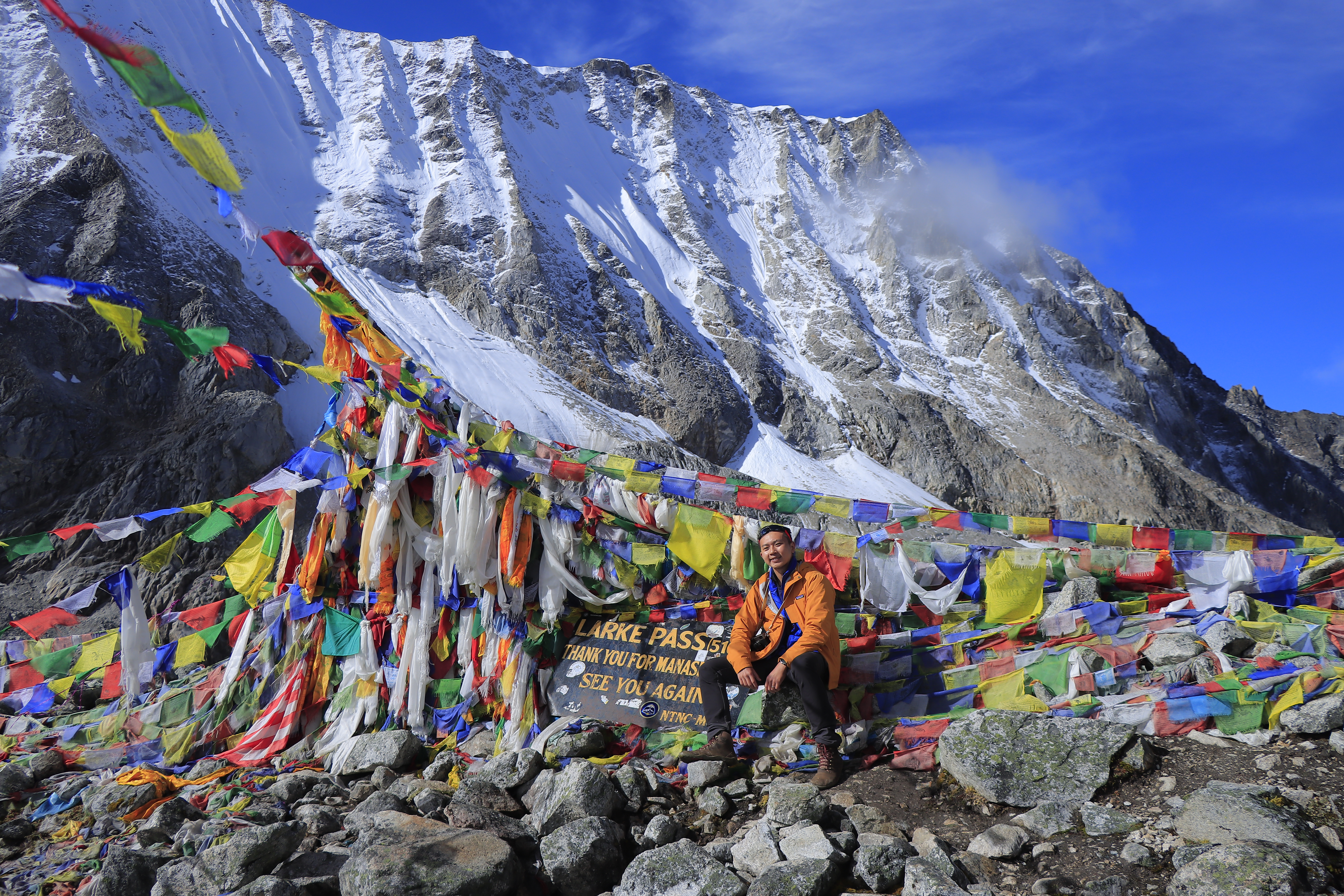
During this adventurous trek, you will be able to go along the Nepal-Tibet border, up to an elevation of roughly 5,215 m at the Larkya La pass. While at the pass, you will get a close view of the eighth-highest mountain in the world, Mt. Manaslu. Along with this, the pass will offer you stunning views of other peaks like Kanguru, Himlung, Cheo, Lamjung, and Annapurna II.
The Manaslu region offers you awe-inspiring views of other peaks throughout different segments of the trek. You will see the gorgeous Shringi Himal, Naike Peak, Mt. Manaslu, Larke, Simnang, ganesh Himal, and Ngadi Chuli in the region.
Beginning in Kathmandu, the Manaslu Trek starts with a scenic yet thrilling drive in a private 4WD to Machha Khola via Soti Khola on a bumpy road. From Machha Khola, we switch to the trail as we begin the walk unveiling an array of landscapes.
Accompanied by the massive Budi Gandaki, we traverse picturesque villages like Jagat, Deng, Ghap, Lho, and Samagaon. A small detour to Manaslu Base Camp will give you a chance to come even closer to the awe-inspiring Manaslu peak.
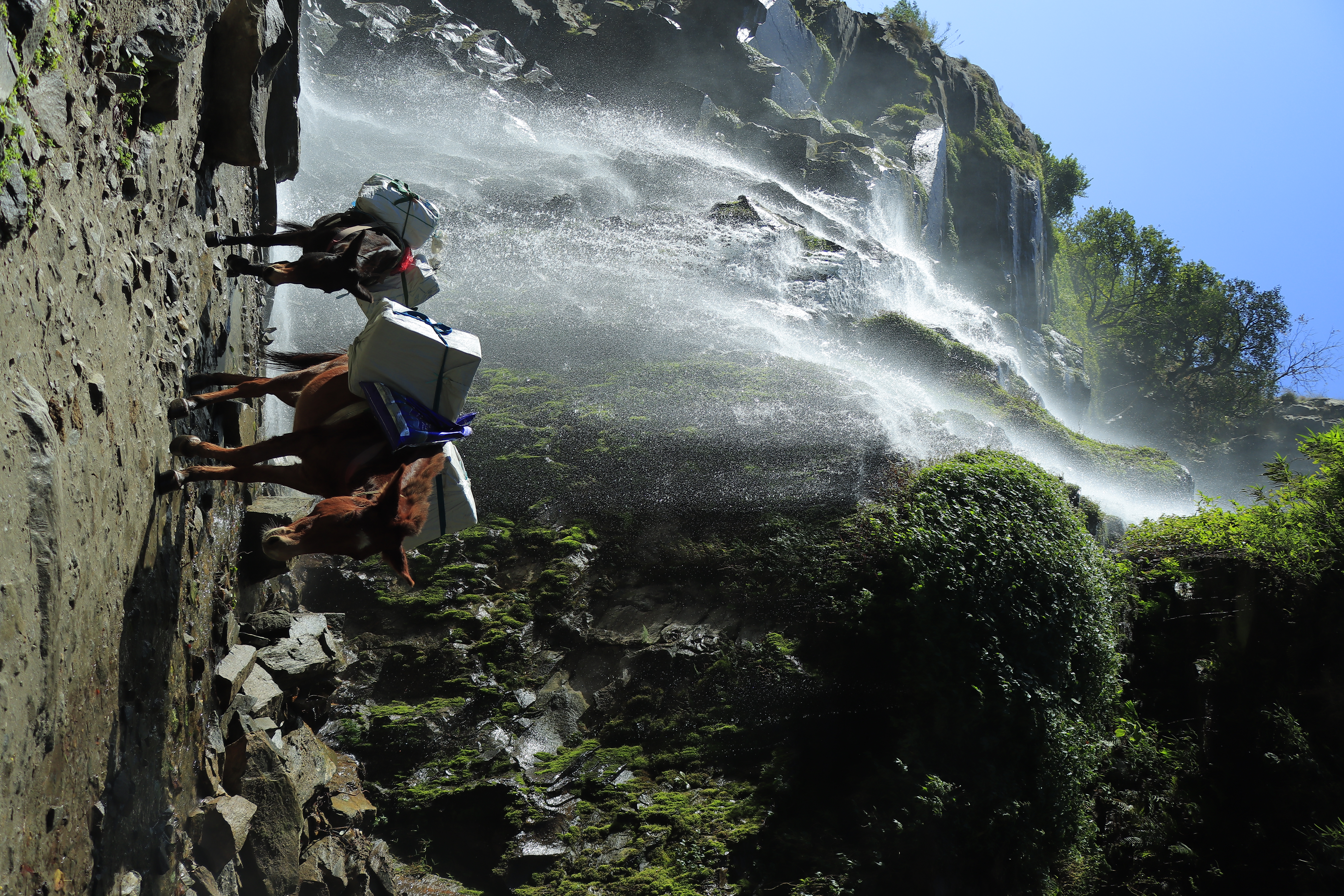
During this journey, we will come across breathtaking waterfalls and serene views of prayer flags and monasteries along the trail immersing you in the Buddhist culture. The walk is going to be quite challenging because of steep uphills at several points.
The Manaslu Circuit trail, being a less travelled one, is not well-facilitated and comfortable. However, the exceptional scenery along with the captivating biodiversity will drive you to complete the challenging trek even if you must drag your feet.
After a day of acclimatization at Samagaon, we ascend to higher elevations crossing Samdo and Dharamsala as the trail meanders through a desert-like landscape with a captivating backdrop.
As we reach Larkya La pass, the highest point of the trek, our challenges have paid off. We get rewarded with the stunning panoramas of the snow-capped mountains where we are surrounded by the raw magnificence of Mother Nature.
Picture-perfect high-altitude glacier lakes and an abundance of captivating flora and fauna create an enchanting backdrop that adds to the allure of this unique region.
The landscape transitions as we descend to Dharapani through Bhimthang and Tilije crossing fig trees and rhododendron forests immersing us in the local Gurung cultures. While going to Dharapani, the concluding point of our trek, we enter the segment on the Annapurna Circuit trek.
Beyond the scenic beauty, the Manaslu trekking is appealing due to its controlled tourism. Being a restricted area, this trail is far from bustling and therefore promotes responsible tourist practices. This also provides you with an exclusive experience of connecting with the essence of this extraordinary region truly.
You can indulge in local eateries, savoring the flavors of authentic Nepali and Tibetan cuisine, and embracing the rudimentary accommodations that provide insights into the local village life of Nepal.
Prepare to be captivated by the untouched beauty of the Manaslu Circuit Trek in Nepal. Traverse its rugged terrain, soak in the serenity of the surroundings, and create lifelong memories in this hidden paradise.
The traditional Nepali Dal Bhat comes with an unlimited refill option, making it one of the most popular dishes to consume on the trek..
Select a package to view what's included and excluded.
One of our officials will greet you at the Tribhuvan International Airport, Kathmandu, upon your arrival. We will take you to the hotel in our private tourist vehicle. Pre-trip meeting will be done and you will meet with your trip guide. Make sure to confirm your queries about trekking in the mountains and gear check up.
Kathmandu, the vibrant capital of Nepal, is a cultural and historical hub filled with ancient temples, bustling markets, and UNESCO World Heritage Sites. A typical sightseeing tour in Kathmandu includes iconic landmarks such as Swayambhunath (Monkey Temple), Pashupatinath Temple, Boudhanath Stupa, and Kathmandu Durbar Square. These sites showcase the city's rich blend of Hindu and Buddhist heritage, exquisite architecture, and traditional art. Exploring the narrow alleys of Thamel, visiting local markets, and witnessing daily rituals and festivals provide an immersive experience of Nepali culture. A Kathmandu sightseeing tour offers a deep insight into the spiritual, historical, and urban life of Nepal.
We will start our trek by driving to Machha Khola from Kathmandu via Soti Khola in a private tourist vehicle after having breakfast. We will drive on a concrete paved road from Kathmandu to Dhading Besi for 3 to 4 hours. After that, the road becomes bumpy and winding, and we will drive on a dirt road for approximately 5 to 7 hours to reach Machha Khola. The total drive for the day will be around 8 to 10 hours
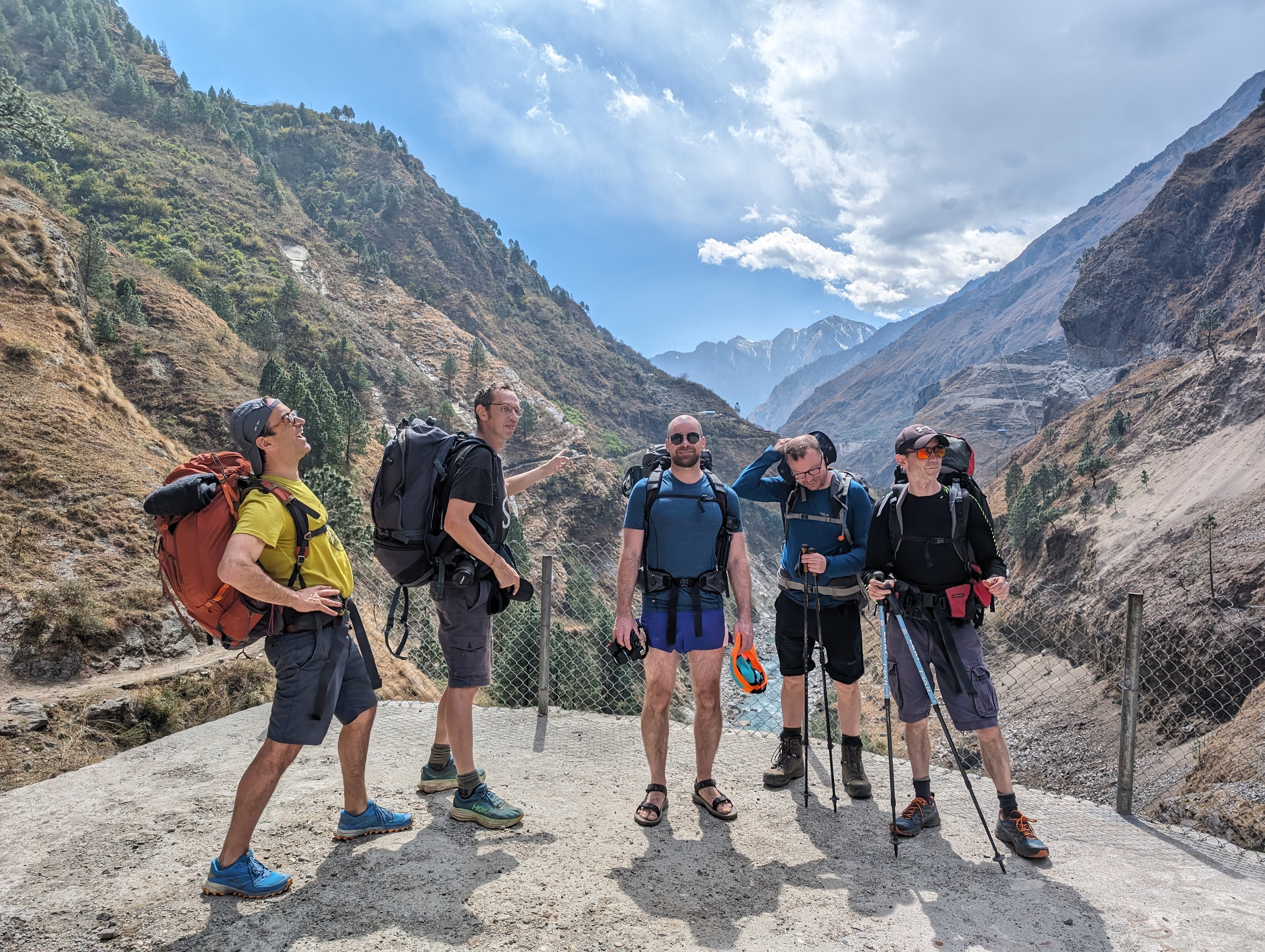
Today, we will start our adventurous trek from Machha Khola to Jagat. We will leave the road and switch to the trails, with a long day of exposure ahead of us.It will take around an hour to reach Khorlabesi (970 m) from Machha Khola, where you can spot wild marijuana plants along the trail. After that, we will cross a hot spring called ‘Tatopani’.We will be walking alongside the massive Budi Gandaki River while witnessing stoats attracting birds along the riverbank and stop at ‘Dovan’ (1070 m), meaning riverside, for lunch after another hour.After a refreshing lunch, we will continue towards Yaruphat via Thulo Dhunga while passing through traditional Gurung and Magar villages, beholding their unique lifestyle and architecture.As we ascend towards higher elevations, we can witness consistently changing gorgeous landscapes as the scenery undergoes a complete transformation.We will reach Jagat (1340 m) after two more hours of an easy trail, and at the entrance lies an MCAP checkpoint where one must present their MCAP permit.We will witness the picturesque setting of the village surrounded by fields with a ‘Mani wall’ in the center, signifying the Tibetan Buddhist Culture. Ultimately, we will spend the night at Jagat and get to experience the local hospitality of the villagers.
After having breakfast, we will begin our trek by descending to the Dudh Pokhari Khola, and then cross a suspension bridge to witness a stunning waterfall beyond Jagat.After walking for fifteen more minutes, we will reach Salleri, which is widely known for its rice and millet fields, and offers a breathtaking view of Shringi Himal, which stands tall at 7,187 meters.During our trek, we will witness several waterfalls and cross a suspension bridge to ascend to Ghatte Khola via the jeep trails. After an uphill trek of 45 minutes, we will reach Philim, where another MCAP checkpoint is located .We will interact with locals and witness their agricultural practices as we walk from Philim to Chisapani, where we will stop for lunch. Continuing our trek, we will cross gorgeous rhododendron forests and lush bamboo trails as we pass through Eleklibhatti.The Gandaki Valley narrows on this trail with soaring precipitous walls. Just before Nyak, the Tsum Valley Trek and Larkye La Pass split off. From Nyak, we will ascend to Pewa and further up to Deng village, following the trail upstream of Deng River.
Today is going to be a long day compared to our previous days. Following breakfast, we will begin our hike by crossing the bridge and dropping for a little while before climbing sharply and zigzagging for 20 minutes to reach Rana village. Two hours from Rana village lies Bihi Phedi which is steeply uphill. We can witness deep-rooted Tibetan culture marked by Mani walls, monasteries, and prayer flags during the trek. The pleasant sound of the waterfall and the ancient writings in the stone, along with seasonal fields of flowering mustard are an additional bonus to this adventurous trek. We will enter a gorgeous and fairly deep forest of blue pine, oak, and rhododendron. We will pass Budi Gandaki and reach Namrung village where we will breathe a little and stay overnight.
Today is a promising day as we will be able to glimpse the Twin Manaslu Summit from the beautiful settlement of Lho (3180m). After the leisurely breakfast, we will head on to Banjam on a leveled path, followed by an hour and thirty minutes of a nearly vertical trail to Lihi. The lovely view of homes with pine shingles covering their roofs, surrounded by Ganesh Himal and Gompa will be a delight to your eyes. The crispy view of the peaks will accompany us as we head to Sho village (2880 m) from Lihi and Lamagaon, crossing the Hinan River originating from Linda Glacier. Sho Village offers easy access to Lho Gaon which will be our resting point for today.
After continuing on a downhill path for around an hour and a half, we reach Samagaon (3,520 m), which is a large and historically significant community. It is unique in its ways as the lower level of the two-storeyed homes are occupied by animals, whose heat is used by the inhabitants to reside on the top level. This beautiful village is going to be our resting spot for the next day.
We stay today at Samagaon for acclimatization and take this time to explore around and interact with the locals. Here, you will be able to learn about traditional practices such as yak herding and spinning the wool.In the course of exploring, we can either visit Pungyen Gompa and glacial Lake Birendra Tal (4-5 hours) or we can take a walk to Manaslu Base Camp and return to Samagaon (7-8 hours). Today, we rejuvenate and prepare ourselves for the trek of the coming days.
After a relaxing day at Samagaon, we go on a primary-level trail to Samdo. It’s a short and simple trail with occasional patches of dry land where the terrain changes to resemble a desert with little vegetation. We climb up a terraced hill on the opposite bank of Budi Gandaki and cross a 30-minute steep slope to reach Samdo (3875m) and witness its unique architecture.
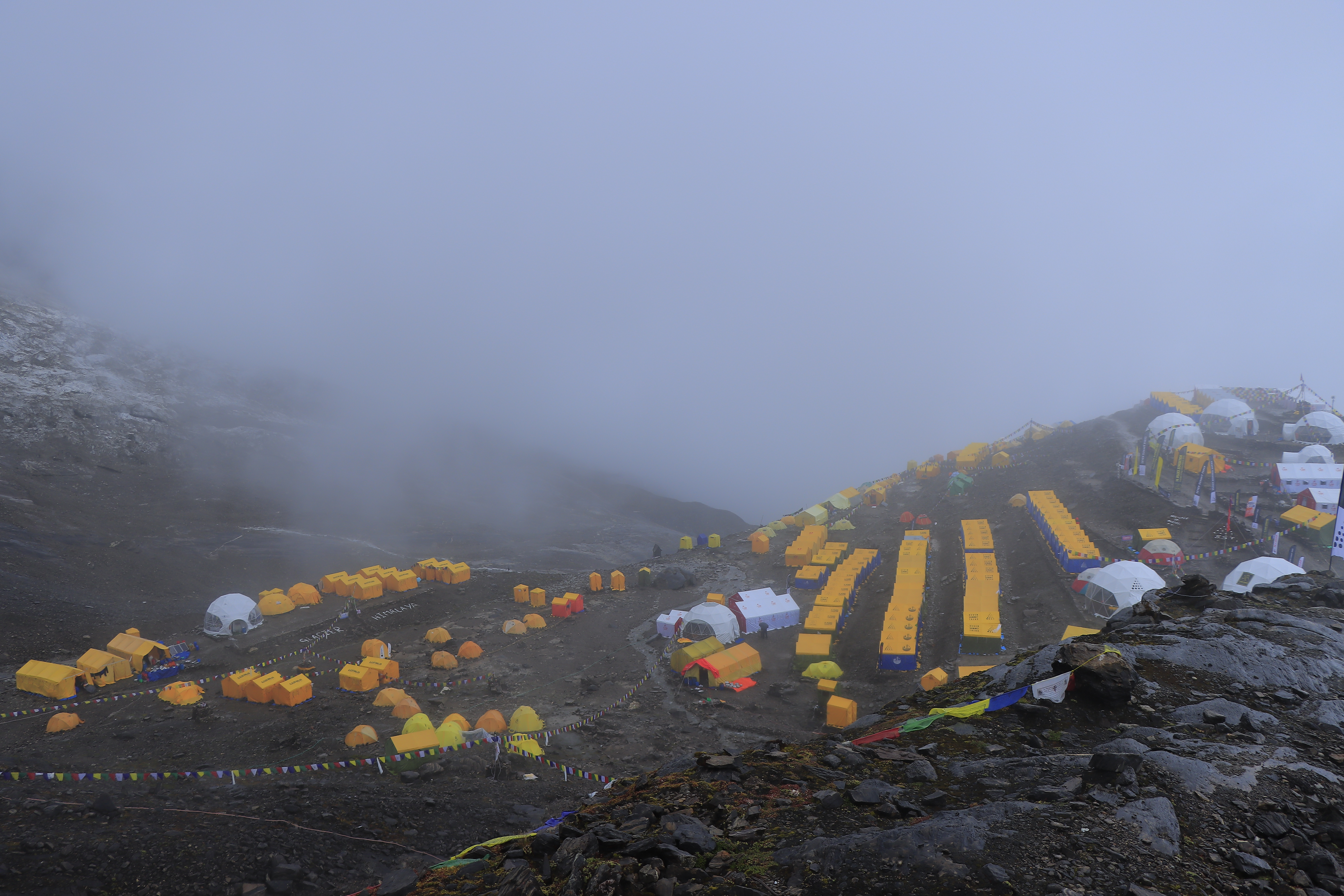
Starting from Samdo, we will begin a 4-hour trek to Dharamashala. The trail is level and you can slowly ascend through the barren landscape through Larkya Bazar, a former Tibetan trading post.Dharmashala, aka Larke Phedi, serves as a resting point for the challenging trek ahead. Situated at an altitude of 4,460 m, Dharmashala consists of the basic facility of food and lodging. However, be mindful of your breathing as you might start having hallucinations too
Along the way, you’ll be rewarded with awe-inspiring views of majestic mountains, including Mount Manaslu, South Manaslu, Nemjung, and other towering peaks, along with striking glaciers like Ponkar and Changri.The trail then descends through alpine meadows filled with pine and rhododendron forests, offering a serene escape.This off-the-beaten-path experience allows you to immerse yourself in tranquil villages and soak in the breathtaking vistas of verdant landscapes and snow-capped mountains.The trail transitions to a classic Nepali flat and descend through quaint villages such as Tilije and Thonje before reaching our final accommodation stop, Dharapani.Tilije is a charming settlement in a hilly region offering you to immerse yourself in the serene Gurung culture and embrace its unique traditions.We will be hiking along the route and continue following the Marsyandi River up to Dharapani, the scenic surroundings provide a perfect backdrop for reflection and appreciating the natural beauty.Upon arrival, you’ll have free time to relax, explore the village, or refresh yourself after the long trekking journey.
Along the way, you’ll be rewarded with awe-inspiring views of majestic mountains, including Mount Manaslu, South Manaslu, Nemjung, and other towering peaks, along with striking g laciers like Ponkar and Changri. The trail then descends through alpine meadows filled with pine and rhododendron forests, offering a serene escape. This off-the-beaten-path experience allows you to immerse yourself in tranquil villages and soak in the breathtaking vistas of verdant landscapes and snow-capped mountains.The trail transitions to a classic Nepali flat and descend through quaint villages such as Tilije and Thonje before reaching our final accommodation stop, Dharapani. Tilije is a charming settlement in a hilly region offering you to immerse yourself in the serene Gurung culture and embrace its unique traditions. We will be hiking along the route and continue following the Marsyandi River up to Dharapani, the scenic surroundings provide a perfect backdrop for reflection and appreciating the natural beauty. Upon arrival, you’ll have free time to relax, explore the village, or refresh yourself after the long trekking journey.
Today, we will embark on a scenic drive from Dharapani to Kathmandu in a private tourist vehicle. The journey will take approximately 10 to 12 hours, depending on traffic and road conditions.The road winds through hills and boasts stunning views of the mountains, including Mount Annapurna II, Annapurna III, Mount Manaslu, Mount Machhapuchhre (Fishtail), and Mount Lamjung,We will begin by traveling on an adventurous dirt road for about 3 to 4 hours from Dharapani to Besisahar. From there, we’ll continue on a paved concrete road to Kathmandu, ensuring a smooth, relaxing, and more comfortable ride. Upon arrival in Kathmandu, we will complete our journey,
The trip concludes – our airport representative will drop you at the Kathmandu international airport for your final flight departure from Nepal.
Our team guides, porters, and accompanying staff are locals with a broad knowledge about each and every location that we travel through.
Below is a recommended list of gear and equipment for Manaslu circuit trek-15days. Most items can be purchased or rented in Kathmandu.
The Manaslu Circuit Trek is in the Gorkha District of Nepal, circling Mount Manaslu (8,163m) — the eighth highest mountain in the world. The trek lies close to the Tibetan border.
The standard trek takes about 14 to 18 days, depending on the route, acclimatization, and side trips.
It is a moderately challenging to strenuous trek due to its remote location, long walking days, and high-altitude pass (Larke La – 5,106m). Prior trekking experience and good fitness are recommended.
Yes, you'll need: Manaslu Restricted Area Permit (RAP) Manaslu Conservation Area Permit (MCAP) Annapurna Conservation Area Permit (ACAP) A minimum of two trekkers and a licensed guide are mandatory.
Spring (March to May) and Autumn (September to November) are the best seasons for stable weather, clear views, and enjoyable trekking conditions.
Yes. The trek reaches over 5,000 meters at Larke La Pass. Proper acclimatization, hydration, and pacing are essential to avoid Acute Mountain Sickness (AMS).
No. Trekking solo is not allowed in the restricted area. You must be with at least one other trekker and accompanied by a registered guide.
Basic teahouses and homestays are available throughout the route. While they offer food and a bed, the facilities are more basic than Everest or Annapurna routes.
Meals include traditional Nepali dal bhat, noodles, soups, pancakes, Tibetan bread, and some Western dishes. Vegetarian meals are easy to find.
Mobile coverage is sporadic, and Wi-Fi is limited to a few teahouses. Do not rely on internet connectivity during the trek.
Yes. Ensure your insurance covers high-altitude trekking (above 5,000m) and emergency helicopter evacuation.



These honest and detailed reviews come from travelers who have previously explored with Glacier Safari. The experiences and feedback shared here are sourced from trusted travel platforms, including TripAdvisor and Google.
